
Coal mine safety and explosives risk control
Coal mine safety demands a higher level of control than almost any other operation. Coal mines combine unique hazards — methane, combustible coal dust and reactive ground — that turn any source of energy, including explosives, into a critical factor. In Australia, where coal is a major industry across Queensland and NSW, coal mine safety is governed by strict regulation and leaves no room for improvisation. At STX Technologies we help operations manage the explosives and blasting risks that sit at the heart of coal mine safety.
Why coal mine safety is a special case
Coal mine safety differs from metalliferous mining because of the presence of potentially explosive atmospheres. Coal releases methane (firedamp) and generates combustible dust in suspension — a combination that can ignite or explode in the presence of a spark, a heat source or a poorly controlled blast. This forces every technical decision in a coal mine to be assessed against a far stricter standard.
In this context, the use of explosives in coal mining is tightly regulated. Not every blasting agent is suitable: underground coal work often requires permitted explosives and procedures designed not to initiate a methane or coal dust explosion. Australian regulators are explicit that blasting in oxidising or reactive ground should be developed in consultation with the explosives manufacturer — a role STX is built for. Coal mine safety depends heavily on how these products are selected, stored, transported and used in the presence of flammable gas.
For STX Technologies, coal mine safety must be approached through technical specialisation. Our focus is the explosives and blasting risks within atmospheres containing methane and combustible dust: review of procedures, energy control, initiation sequences and compatibility of products with the mine atmosphere. That way coal mining operations have clear technical criteria to operate more safely.
Where coal mine safety needs the most technical control
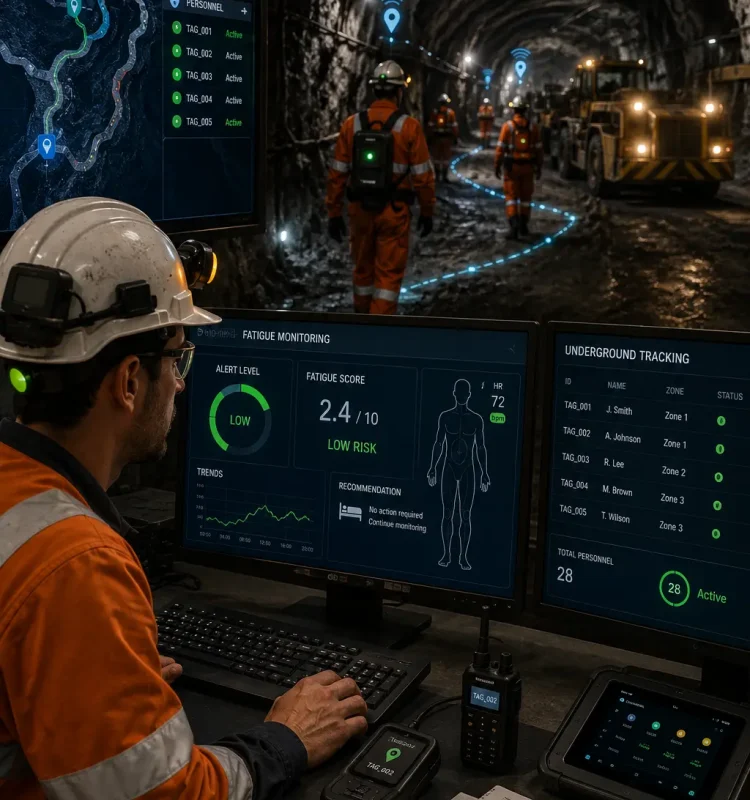
Coal mines concentrate risks that don’t exist — or are minor — in other operations. When we talk about coal mine safety linked to explosives and critical processes, there are areas where specialised technical support is the difference between a safe operation and a catastrophic event.
Flammable atmospheres
Addresses control of methane and coal dust, assessing how they interact with energy sources and explosives during the operation.
Explosives & blasting
Reviews selection, storage and use of explosives compatible with firedamp atmospheres, alongside initiation sequences and energy control.
Procedures & emergencies
Assesses procedures, exclusion zones and emergency readiness — essential elements of underground coal mine safety.
These areas are deeply connected. Poor ventilation management can let methane accumulate; an unsuitable explosive can initiate an explosion; a weak procedure can turn a near-miss into a tragedy. That is why coal mine safety must be treated as an integrated, specialised system.
The main hazards of underground coal mining
Underground coal mining faces a family of hazards that sets it apart from any other operation. Understanding them is the first step to designing effective controls. Coal mine safety is built on a deep understanding of how gas, dust and energy behave inside the mine.
Critical hazards addressed by coal mine safety
- Firedamp explosion: methane accumulation that ignites from an ignition source.
- Coal dust explosion: combustible particles in suspension that amplify a deflagration.
- Spontaneous combustion of coal.
- Risks from explosives not compatible with flammable atmospheres.
- Ventilation deficiencies that allow gas to accumulate.
- Misfires and failures in firing sequences.
When these coal mine hazards are analysed with expert insight, safety stops being reactive. Scenarios are anticipated, compatible products are selected, energy sources are controlled, and the operation is prepared to respond before a hazard turns into a catastrophic event.
Essential controls for coal mine safety
A safe coal mining operation combines controls over the atmosphere, the explosives and the procedures. The table below summarises the key fronts coal mine safety addresses, what is controlled in each, and the expected outcome.
| Control front | What is controlled in coal mines | Expected outcome |
|---|---|---|
| Mine atmosphere | Methane (firedamp) levels, coal dust in suspension and air quality. | Lower explosion risk and atmospheres within safe limits. |
| Explosives & blasting | Product compatibility, storage, initiation sequences and energy control. | Safe blasting without initiating firedamp or combustible dust. |
| Procedures | Exclusion zones, work authorisation and competency of licensed personnel. | Orderly, traceable operation with clear accountabilities. |
| Emergencies | Response plans, evacuation routes and readiness for critical events. | Real capacity to respond to a coal mine emergency. |
Coal mine safety is a specialised application of a broader framework. If the operation needs to structure hazard identification and control, the mining risk management page works as a complementary vertical; and for the broader safety framework, see mining safety consulting.
Explosives and blasting in coal mines: the most sensitive factor
In coal mine safety, the handling of explosives is probably the most sensitive factor. Unlike metalliferous mining, here a poorly designed blast doesn’t just fragment rock: it can become the ignition source of a firedamp or coal dust explosion. That is why the use of explosives in coal mining follows strict criteria of compatibility with the atmosphere — and why Australian regulators require permitted explosives and manufacturer consultation for reactive ground.
This means every product, every initiation sequence and every charging procedure must be assessed considering the presence of flammable gas and dust. Real incidents reported by regulators — misfires from current leakage in damp conditions, live detonators in fragmented rock, delayed detonations of permitted explosives — show how thin the margin is. Coal mine safety depends on these elements being aligned with the real environment of the operation, not just meeting a generic blasting standard.
What a coal blasting safety review covers
- Compatibility of explosives with potentially flammable atmospheres.
- Control of energy and heat generated during initiation.
- Storage and transport procedures in coal mines.
- Firing sequences and delay timing.
- Exclusion zones and atmosphere verification before firing.
- Competencies of personnel handling explosives in coal mining.
The advantage of specialised external support is technical objectivity: it detects incompatibilities and risks a non-specialist team might overlook. In an environment where one error can be catastrophic, that specialisation makes coal mine safety an investment, not a cost.
Ventilation and atmosphere control in coal mines
Ventilation is one of the pillars of coal mine safety. Its job is to dilute and remove methane, control combustible dust and keep the mine atmosphere within safe limits. Poor ventilation allows firedamp to accumulate, creating the conditions for an explosion that any energy source could trigger.
That is why, in coal mining, atmosphere control is not an add-on but a condition of operation. Coal mine safety requires gas monitoring, clear criteria to stop activities when levels exceed limits, and coordination between ventilation and any task involving heat sources or explosives.
Elements reviewed in coal mine safety
- Monitoring of methane and air quality at the working face.
- Control of coal dust in suspension and its settling.
- Criteria to stop tasks in hazardous atmospheres.
- Coordination between ventilation and explosives activities.
- Prevention of spontaneous combustion of coal.
- Emergency readiness and evacuation routes.
When a coal mine needs specialist support
Strengthening coal mine safety with external support is advisable when the operation manages risks that need specialist expertise the internal team doesn’t always hold. Coal mining has particulars — firedamp, combustible dust, compatible explosives — that demand expert insight to validate controls and prevent catastrophic events.
Signs your coal mine safety should be reinforced
- Methane accumulations or ventilation failures are detected.
- There are doubts about explosives compatibility with the mine atmosphere.
- Blasting activities are starting or being modified in the coal mine.
- The operation has had gas- or dust-related near-misses.
- Specific procedures for underground coal mining are needed.
- Technical evidence must be prepared for audits or inspections.
In these cases, support doesn’t replace the internal team: it complements it with specialised expertise in explosives and flammable atmospheres, strengthening the operation’s whole coal mine safety system.
Frequently asked questions about coal mine safety
Why is coal mine safety different from other operations?
Because coal mines present hazards that don’t exist in metalliferous mining: methane (firedamp), combustible coal dust and spontaneous combustion. This combination creates potentially explosive atmospheres, demanding far stricter controls over ventilation, energy sources and — especially — the use of explosives. Coal mine safety requires proven technical specialisation.
Can explosives be used in coal mines?
Yes, but under very specific conditions. In atmospheres with firedamp or combustible dust, permitted explosives and procedures designed not to initiate an explosion are required. Product selection, initiation sequences, energy control and atmosphere verification before firing are decisive for coal mine safety. Australian regulators also require consultation with the explosives manufacturer for reactive ground.
What is firedamp and why is it so dangerous?
Firedamp is the methane released from coal. It’s dangerous because, at certain concentrations with air, it forms an explosive mixture that can ignite from a spark, heat or a poorly controlled blast. Controlling firedamp through ventilation and monitoring is one of the foundations of coal mine safety.
What causes a misfire in a coal mine, and why does it matter?
Misfires can come from damaged detonator leg-wires, current leakage in damp conditions, incompatible products or procedural failures — all documented in real regulator alerts. In a coal mine, a misfire is especially serious: a live detonator or delayed detonation near methane can initiate a gas explosion. A specialised review of products and procedures reduces this risk.
Does coal mine safety apply to open-cut as well as underground?
Firedamp and confined-atmosphere risks are characteristic of underground coal mining, but open-cut coal isn’t risk-free: combustible dust, reactive ground and hazardous gases accumulating in blast holes and pits are all documented hazards. Specialised support adapts coal mine safety controls to the specific type of operation.
How does STX help with coal mine safety?
STX Technologies brings specialisation in the explosives and blasting risks within flammable environments. We review product compatibility, storage and handling procedures, initiation sequences and energy control, delivering technical criteria so the coal mining operation is safer and more traceable. As an explosives formulator, STX fills exactly the manufacturer-consultation role regulators recommend for reactive ground.