
Mining risk management for operations using explosives
Mining risk management is the technical process of anticipating, assessing and controlling the hazards present in a mining operation before they turn into incidents. In sites where explosives, stored energy, heavy equipment and strict regulatory demands coexist, sound risk management is not a paperwork exercise: it is the foundation for safe decisions, operational continuity and the protection of people. At STX Technologies we approach mining risk management with engineering rigour and a clear focus on critical processes.
What mining risk management is and why it matters
Mining risk management is a structured process for identifying hazards, estimating their likelihood, evaluating their consequences and defining controls that reduce unwanted events. Unlike a one-off review, risk management in mining works as a continuous cycle that follows every stage of the project: from the initial site assessment to day-to-day operations involving explosives and blasting.
In practical terms, effective mining risk management answers questions that directly affect safety and performance: are the operational hazards correctly identified? Are the applied controls verifiable? Does the operation hold enough technical evidence to defend its decisions during an audit? Good risk management turns uncertainty into clear, actionable criteria.
For STX Technologies, mining risk management must deliver traceability and method. This means documenting every decision, training teams to recognise critical signals, and connecting corporate risk management with the reality on site. That way, managers, mining engineers, HSE leads and explosives manufacturers can rely on a risk management approach that protects the operation and supports its regulatory compliance.
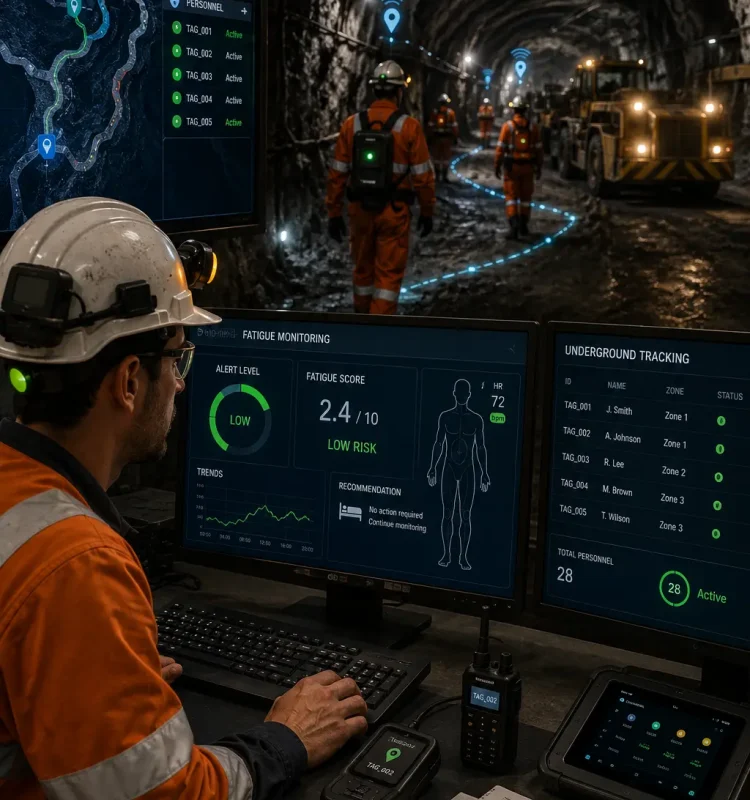
Where mining risk management delivers the most value
A mining operation may need risk control across multiple fronts. However, when we talk about risk management focused on explosives, safety and critical processes, there are areas where a strong approach makes a direct difference to incident prevention and productivity.
Operational risks
Reviews procedures, work sequences, interaction between areas and ground conditions to reduce uncertainty and improve operational coordination.
Explosives risks
Addresses storage, transport, handling, charging and initiation, applying controls that increase safety during the site’s most critical activities.
Regulatory risks
Reviews permits, documentation and evidence of compliance to reduce regulatory exposure and prepare the company for audits or inspections.
These areas are connected. A weakness in operational risk management can compromise a blast; a gap in regulatory risk can shut down the operation. That is why risk management must be addressed as an integrated system, not as isolated controls.
How mining risk management is applied on site
Mining risk management starts from a simple principle: you cannot control what you have not identified. That is why the first step of any risk management process is to recognise the real hazards of the operation — physical, operational, environmental and regulatory — and understand how they interact within the site environment.
Stages of a mining risk management process
- Hazard identification in areas where mining work or activities with explosives take place.
- Estimating the likelihood and consequences of each operational risk.
- Assessing and prioritising risks according to their level of criticality.
- Defining technical controls for storage, transport, handling and use of explosives.
- Documenting risk management as evidence for audits and inspections.
- On-site verification of the gap between procedure and real practice.
When mining risk management is carried out with expert insight, it doesn’t just detect problems: it helps prioritise them by risk level, operational impact and urgency of intervention. That is the difference between reactive risk management and a genuinely preventive one.
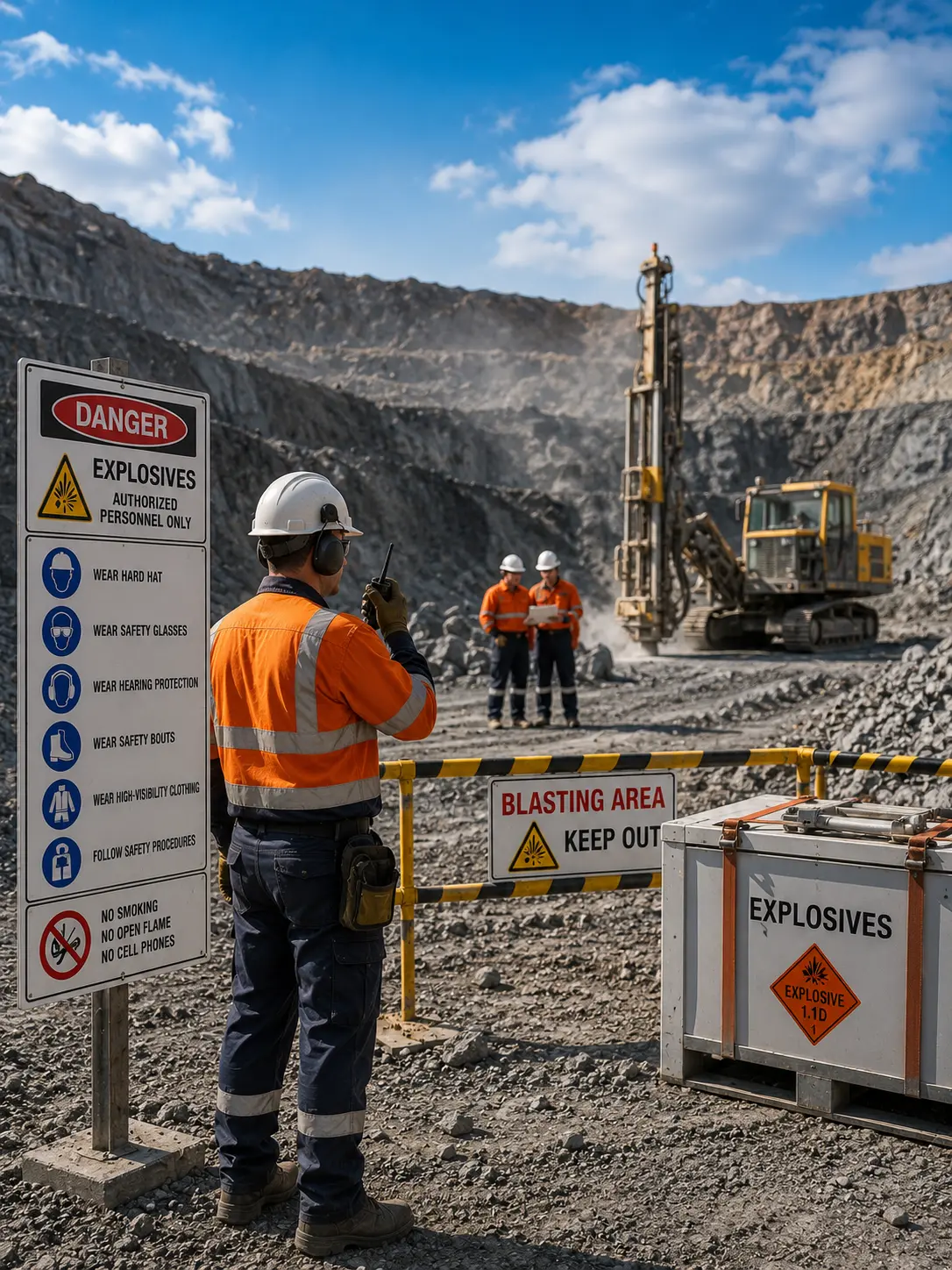
Types of risk addressed by mining risk management
A mature mining risk management approach classifies threats so they can be treated with the right methodology. The table below summarises the main types of risk, what risk management reviews in each case, and the expected outcome.
| Type of risk | What risk management reviews | Expected outcome |
|---|---|---|
| Operational risks | Procedures, equipment, work sequences, interaction between areas and ground conditions. | Clearer controls, less uncertainty and better operational coordination. |
| Explosives-related risks | Storage, transport, handling, charging, initiation and exclusion zones. | Greater safety in critical activities and traceability of controls. |
| Regulatory risks | Legal requirements, permits, documentation and evidence of compliance. | Lower regulatory exposure and better readiness for audits. |
| Environmental risks | Vibration, fly-rock, fumes, dust, noise and management of sensitive areas. | Better integration of operation, safety and environmental criteria. |
A well-executed risk management approach lets you move from reactive to preventive. If the operation needs to go deeper into the control of people and procedures, the mine safety and health page works as a complementary vertical covering protocols, competencies and technical responsibilities.
Critical control management in mining risk
Modern mining risk management increasingly relies on critical control management (CCM): the practice of identifying the controls that genuinely prevent fatal or catastrophic events, and verifying that they are in place and effective. Rather than treating all risks equally, this approach concentrates effort where a failure would have the most severe consequences — which, in operations using explosives, is often decisive.
This is why a mining operation needs risk management that connects the operational reality with corporate governance. When controls are documented and verified, the company doesn’t just operate more safely: it also strengthens its position with insurers, auditors and regulators.
Key elements of strong mining risk management
- Systematic identification of hazards and unwanted events.
- Risk matrices with likelihood and consequence criteria.
- Preventive and corrective controls that are verifiable on site.
- Documentary traceability to support corporate risk governance.
- Training of personnel exposed to critical risks.
- Periodic review to keep the risk management current.
The advantage of external mining risk management is objectivity: by not depending on internal pressures, it enables honest diagnoses and controls the internal team can’t always propose. That independence turns risk management into an investment, not a cost.
Mining risk management and regulatory compliance
Mining risk management and regulatory compliance are inseparable. Under the Work Health and Safety (WHS) framework and the relevant state mining regulations, companies must demonstrate that their activities meet permits, procedures, internal standards and legal requirements. This becomes even more critical when explosives, energetic substances, specialised storage and licensed personnel are involved, where a failure in risk management can lead to penalties or stoppages.
Good risk management reviews the consistency between what the company declares, what the regulation requires and what actually happens on site. This insight allows gaps to be detected before they turn into findings, incidents or operational shutdowns.
Documents and controls reviewed in mining risk management
- Procedures for handling, storage and use of explosives.
- Risk matrices and controls linked to each critical activity.
- Training records and personnel competencies.
- Internal permits and authorisations for high-risk activities.
- Emergency response and operational communication protocols.
- Documentary evidence for audits, inspections or internal reviews.
When a company needs to strengthen its mining risk management
Strengthening mining risk management with external support is advisable when the operation faces technical decisions that require independence or specialisation. Often the internal team knows the day-to-day operation well but needs expert insight to validate controls, detect non-obvious threats and document risk governance in greater depth.
Signs that your mining risk management should be reinforced
- The operation shows repetitive incidents or hard-to-explain deviations.
- There are doubts about regulatory compliance linked to explosives.
- A site needs assessing before starting critical activities.
- The company needs to improve blasting, storage or handling procedures.
- New products, technologies or work methods are being introduced.
- Evidence must be prepared for audits or external inspections.
In these cases, external risk management doesn’t replace the internal team: it complements it with method, analysis and actionable recommendations that strengthen the whole operation’s risk management.
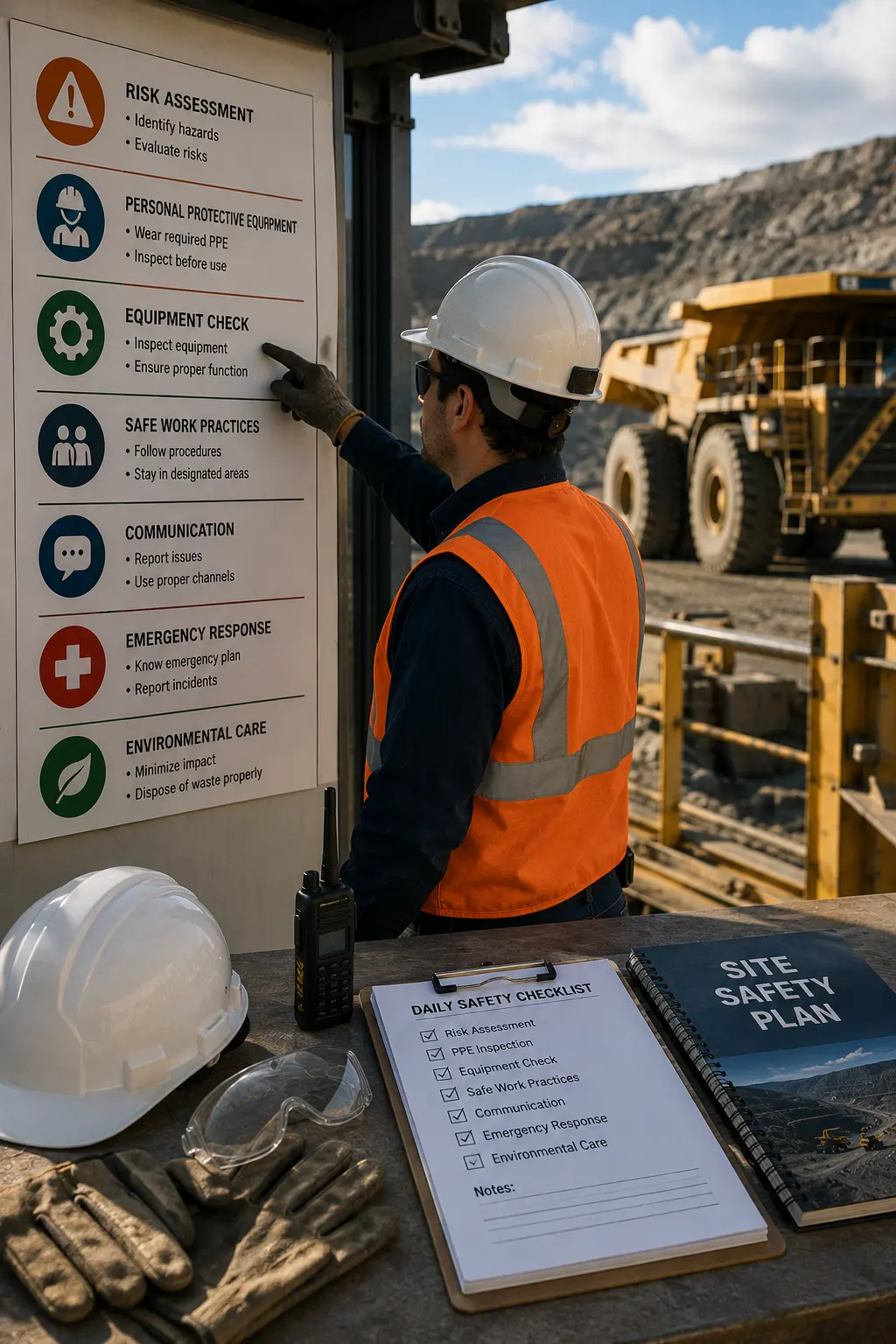
Frequently asked questions about mining risk management
What does a mining risk management service include?
A complete mining risk management service includes hazard identification, likelihood and consequence assessment, control definition, documented risk matrices, an implementation plan with owners and timelines, personnel training and follow-up verification. At STX Technologies we hand over all risk management documentation as a client asset, with no unnecessary dependence on the consultant going forward.
How is mining risk management different from mining insurance?
Insurance transfers the financial consequence of an event but does not reduce its likelihood. Technical risk management acts earlier: it identifies and controls the causes on site. The two are complementary; in fact, strong risk management improves your position when negotiating insurance.
How does mining risk management relate to explosives?
Activities involving explosives concentrate some of the most critical risks in mining: storage, transport, charging and initiation. Specialised risk management reviews each of these processes and defines verifiable controls, reducing the likelihood of incidents and leaving traceability for audits.
How often should an operation's risk management be reviewed?
Risk management is a continuous cycle, not a one-off event. It should be reviewed when the mining method changes, when new products or technologies are introduced, after a significant incident, or ahead of audits. Keeping mining risk management current prevents controls from becoming obsolete
Does a small mining operation also need risk management?
Yes. The size of the operation does not remove operational or regulatory risks. A small operation often has greater exposure because it has fewer internal resources. Risk management proportional to its scale lets it operate safely and meet regulations without excessive cost.
What return does investing in mining risk management deliver?
The main return is incident prevention, which avoids stoppages, penalties and operational losses often far greater than the cost of the service. Add to that a stronger position for negotiating insurance, lower regulatory exposure and better continuity. STX Technologies defines indicators before starting and measures results at completion.