
Emulsion manufacturing plant:
engineering, process safety and plant support
Every decision made during design, construction, operation and maintenance has a direct impact on the quality of the final product, economic efficiency, personnel safety and regulatory compliance
What is an emulsion manufacturing plant?
An emulsion manufacturing plant is an industrial installation designed to produce emulsion matrix —the base, unsensitised product— and, in some cases, finished products such as Heavy ANFO or sensitised emulsions ready for loading into the blast hole. Its purpose is to transform basic raw materials (aqueous ammonium nitrate solution, mineral oil, emulsifier, additives) into a product with the colloidal structure, chemical properties and quality required to serve as a safe and high-performance industrial explosive.
Unlike a simple storage facility or magazine, the plant produces on demand, according to the operational calendar of the mine. This reduces the inventory of sensitised explosives —and therefore the risk—, decreases dependence on external logistics, and allows the formulation to be adjusted to the specific conditions of the deposit.
Main functions of an emulsion manufacturing plant:
- Reception and controlled storage of raw materials.
- Preparation of the hot ammonium nitrate oxidising solution.
- Emulsification through high-shear reactors.
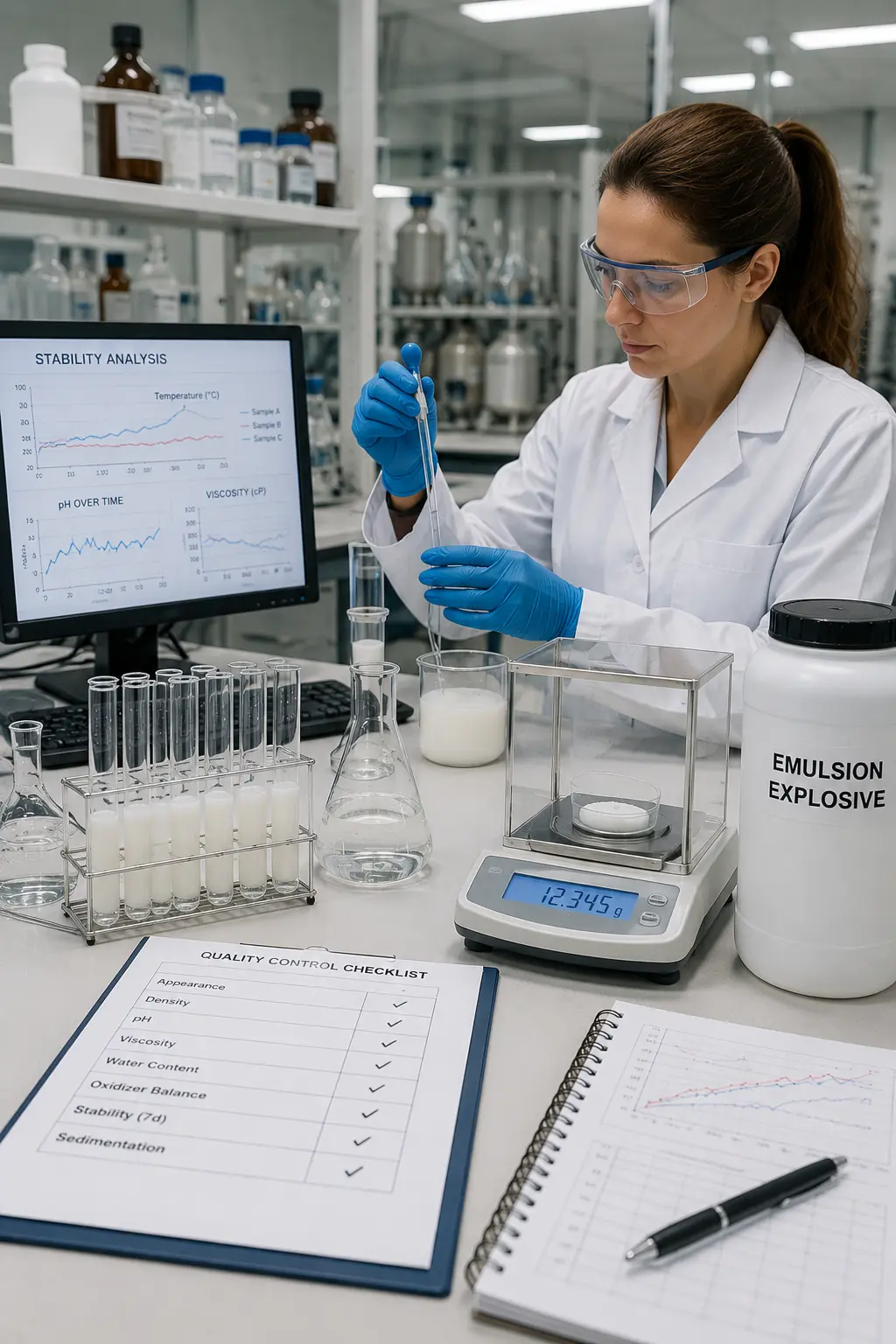
- Inline quality control (density, viscosity, microscopic granulometry).
- Loading of MMU (Mobile Manufacturing Unit) trucks or direct dispatch to blast holes.
- Preventive maintenance and CIP (Clean-In-Place) of critical equipment.
- Complete documentary traceability of every batch produced.
The choice between these models depends on the required volume, site conditions, expansion plans and the desired balance between initial CAPEX and long-term OPEX. To understand how these decisions translate into specific chemical formulations, visit our formulation of emulsions page.
Technical components of a modern emulsion manufacturing plant
Every technical plant dedicated to explosive emulsions integrates interconnected modules that work in controlled sequence. Modularity is not just an organisational matter: it allows capacity to be scaled without replacing the entire installation and simplifies maintenance through independent areas.
| Parámetro | Rango óptimo | Impacto en el rendimiento |
|---|---|---|
| Tamaño medio de gota | 1 – 5 µm | Mayor sensibilidad y VOD |
| Distribución de tamaños | Unimodal estrecha | Consistencia entre disparos |
| Uniformidad espacial | Alta | Estabilidad estructural |
| Espesor de la película interfacial | Controlado | Resistencia a la coalescencia |
| Densidad de empaquetamiento | Alta | Mayor energía por unidad de masa |
Technical features that distinguish a world-class plant:
- Automated temperature control at every stage of the process.
- Mass dosing with precision below ±0.5%.
- High-shear reactors with adjustable RPM control.
- Passive venting systems towards safe zones.
- Redundant instrumentation on critical variables (temperature, pressure, pH).
- Digital traceability of every batch from raw materials to dispatch.
- Capacity to produce different formulations without cross-contamination.
Each of these components must be designed considering not only normal operation, but also failure, maintenance and emergency scenarios.
Emulsion manufacturing: the process from raw material to final product
Emulsion manufacturing as an industrial process is a tightly orchestrated sequence of physical and chemical operations. Understanding the manufacturing flow helps operators, engineers and decision-makers grasp why every step matters and how small deviations at one stage can propagate to product quality at the end of the line.
Typical emulsion manufacturing process flow:
- Raw material verification — Quality control of incoming ammonium nitrate, oil, emulsifier and additives.
- Oxidising solution preparation — Ammonium nitrate is dissolved in water at controlled temperature to reach 80–85% concentration.
- Fuel phase preparation — Oil and emulsifier are blended at controlled temperature in agitated tanks.
- Emulsification — Both phases are combined under high shear in specialised reactors, producing the W/O matrix with microscopic droplets between 1–10 µm.
- Cooling and stabilisation — The matrix is gently cooled while maintaining structural integrity.
- Inline quality control — Density, viscosity, microscopic structure and pH are verified.
- Intermediate storage — The matrix is kept in insulated tanks under controlled conditions.
- Dispatch — The matrix is loaded into MMU trucks for transport to the blast face.
- Field sensitisation — Chemical gasification or microspheres are added at the moment of loading the blast hole.
- Batch documentation — Certificate of Analysis (CoA) is issued for traceability.
Critical control points in emulsion manufacturing:
- Solution temperature in the dissolution reactor.
- Shear rate and residence time in the emulsification reactor.
- Mass ratio between oxidising solution, fuel phase and emulsifier.
- pH and nitrite content of the oxidising solution.
- Cooling profile after emulsification.
- Microscopic droplet size distribution in the final product.
Modern operations rely on integrated SCADA systems that monitor and document each of these variables in real time. Any deviation triggers automated alarms and, where necessary, controlled process interruptions. To learn how product quality directly impacts how long the emulsion remains usable, visit our emulsion shelf life page.
Process safety: the invisible pillar of every plant
Process safety —known internationally as Process Safety Management (PSM)— is the set of technical, organisational and management practices oriented at preventing major incidents: fires, explosions, uncontrolled thermal decompositions and chemical releases. In a plant that handles hot ammonium nitrate, combustible oils and reactive gasifying agents, process safety is not optional: it is the foundation on which the entire operation is built.
Fundamental principles of process safety:
- Systematic hazard identification through HAZID, HAZOP, What-If, bow-tie analyses.
- Independent protection layers (IPL) between the operator and the undesired scenario.
- Redundant temperature control in critical tanks and reactors.
- Early detection systems for thermal decomposition (NOx, colour, temperature).
- Standard operating procedures (SOPs) auditable and continuously updated.
- Management of change (MOC) documented for any modification.
- Incident and near-miss investigation with root cause analysis.
Inherently safer design
- Minimise the inventory of energetic material at each stage.
- Operate at the lowest temperature compatible with the process.
- Physically segregate the gasification area from the rest of the plant.
- Use low-speed positive displacement pumps to avoid hot spots.
- Install thermal relief valves on all heated tanks.
- Ensure passive venting towards safe zones.
- Limit the maximum stored quantity according to applicable regulations.
The emulsion matrix is, by chemical definition, non-detonable. The plant must be designed so that this condition is maintained at all times, even under multiple-failure scenarios.
Plant support: the difference between operating and producing well
Having a plant installed does not guarantee reliable production over the years. Plant support is the ecosystem of technical services, maintenance, spare parts and training that keeps the installation operating at its nominal capacity year after year. Without a structured support program, efficiencies fall, emulsion quality degrades, operational risks rise and unforeseen costs multiply.
Pillars of integrated plant support:
- Scheduled preventive maintenance according to operating hours and equipment criticality.
- Rapid-response corrective maintenance with strategic spare parts stock.
- 24/7 remote technical assistance via secure connection to the plant’s SCADA.
- Periodic process audits to detect deviations before they generate losses.
- Continuous training of operating and maintenance personnel.
- Reliable supply of critical raw materials with logistic backup.
- Technological updating in line with the evolving state of the art.
Concrete benefits of a good support program:
- Reduction of unplanned downtime by more than 60%.
- Extension of critical equipment lifetime by 20–30%.
- Improved chemical consistency of the product batch to batch.
- Reduction of unforeseen maintenance costs.
- Sustained regulatory compliance over time.
- Robust operational capacity in the face of personnel turnover.
Emulsion plant operations: practical aspects of running production
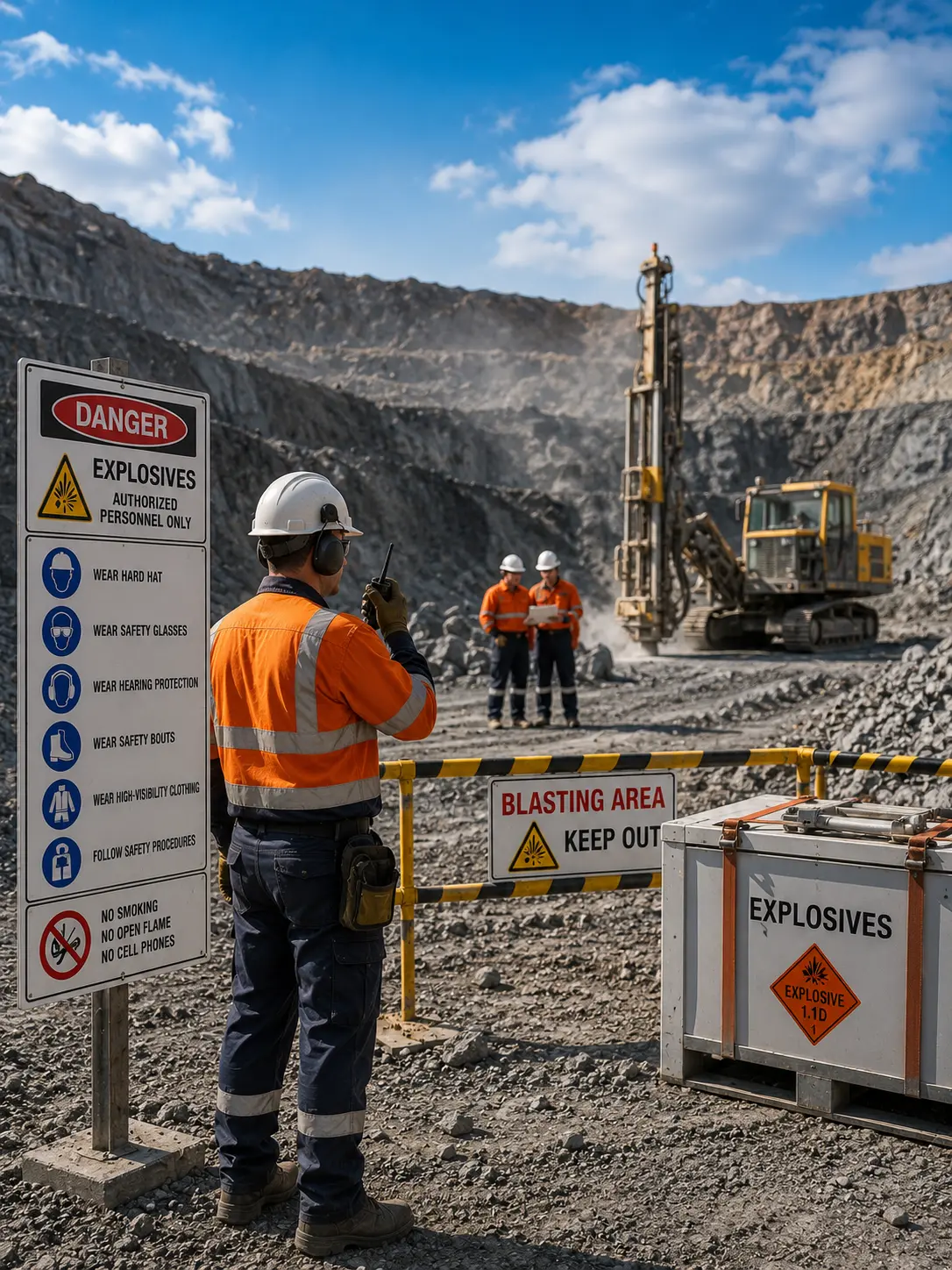
Operating an emulsion plant in practice requires far more than technical knowledge. It requires disciplined operational routines, well-trained personnel, structured quality control and rigorous documentation. Plants that operate at world-class standards share a number of operational practices that any operator can learn from and adopt.
Daily operational disciplines in a high-performing emulsion plant:
- Shift handover protocols — Documented transfer of operational status between shifts.
- Real-time SCADA monitoring — Continuous observation of all critical variables.
- Inline quality control — Sampling and analysis at multiple points along the process.
- Maintenance window respect — Strict adherence to scheduled intervention windows.
- Incident and near-miss reporting — All events documented and analysed.
- Daily housekeeping — Clean and orderly facilities reduce accident risk.
- Pre-task safety analysis — Risk assessment before non-routine work.
- Toolbox talks — Brief operational and safety meetings at shift start.
- Batch documentation — Complete records of every production batch.
- Continuous improvement reviews — Regular reviews to identify optimisation opportunities.
Frequently asked questions about emulsion manufacturing plants
What is an emulsion manufacturing plant and what does it produce?
An emulsion manufacturing plant is an industrial installation designed to produce explosive emulsion matrix —the base, unsensitised product— and, in some cases, finished sensitised products. It transforms raw materials such as ammonium nitrate solution, mineral oil, emulsifier and additives into a stable colloidal product that serves as the foundation for modern blasting in mining. The matrix produced is non-detonable until sensitised in the field, which makes the plant intrinsically safer than alternative explosive manufacturing facilities.
Why is process safety so critical in emulsion manufacturing plants?
Process safety is critical because emulsion plants handle large volumes of hot ammonium nitrate, combustible oils and reactive gasifying agents simultaneously. A major incident such as an uncontrolled thermal decomposition could affect many people, infrastructure and the environment. Process safety management applies principles like inherently safer design, independent protection layers, safety instrumented systems, hazard identification studies (HAZID, HAZOP), management of change procedures and standardised operating procedures to prevent such events before they occur, rather than relying solely on response after the fact.
What does a structured plant support program typically include?
A structured plant support program typically includes scheduled preventive maintenance based on operating hours and equipment criticality, rapid-response corrective maintenance with strategic spare parts inventory, 24/7 remote technical assistance via secure SCADA connection, periodic process and safety audits, continuous training of operators and maintenance personnel, reliable supply of critical raw materials with logistic backup, and progressive technological updates. Together these elements keep the plant operating at nominal capacity year after year, with predictable costs and minimal unplanned downtime.
How does explosives manufacturing differ between emulsions and other technologies?
Explosives manufacturing encompasses several branches: ANFO blending, Heavy ANFO blending, emulsion production, dynamite manufacturing, watergel/slurry production, detonator manufacturing and accessory production. Emulsion manufacturing stands out because of its chemical sophistication —requiring high-shear emulsification, precise temperature and pH control, and complex quality monitoring— combined with its inherent safety, since the unsensitised matrix is non-detonable. ANFO blending is simpler and cheaper but more limited in performance; dynamite manufacturing is more dangerous and increasingly less used; detonator manufacturing requires highly specialised facilities and is typically separated geographically from other operations.
What should I consider when looking at an emulsion plant for sale?
When evaluating an emulsion plant for sale, key considerations include production capacity matched to actual demand, technology and process control aligned with planned formulations, automation and SCADA quality appropriate for the operator’s technical maturity, modularity for future expansion, full regulatory compliance in the relevant jurisdiction, equipment provenance from reputable manufacturers, accessibility for maintenance, total cost of ownership over the operational lifetime, and the availability of a structured technical support program. A second-hand plant can be a viable option if comprehensive due diligence is done, but it typically requires modernisation and operator training before commissioning.
Why is the emulsion suppliers ecosystem so important?
The supplier ecosystem is critical because plant performance depends not only on internal operations but on the reliable supply of raw materials (ammonium nitrate, mineral oil, emulsifier, additives), spare parts, technical services and instrumentation. A failure or quality issue in any of these inputs can disrupt production, compromise product quality or trigger safety incidents. Operators with mature supplier strategies qualify multiple sources for critical inputs, maintain strategic spare parts inventory, audit major suppliers periodically, establish long-term framework agreements and track supplier performance with documented KPIs. This builds resilience against supply chain volatility, which has become a strategic priority in the global mining industry.