
Mining Safety for Explosive Operations
STX provides specialized technical support for explosive operations by integrating laboratory validation with field experience to identify risks before they impact safety or production. Their work helps teams understand why failures happen and how to reduce technical uncertainty in environments involving detonators, emulsions, and reactive ground. By basing decisions on verified information, STX ensures greater operational certainty and prevents serious losses.
Mining Safety Services for Explosive Companies
Our mining safety services are designed for companies that need specialized support in explosive products, operational control, technical validation and risk prevention. In this type of work, safety cannot be separated from product behavior, raw material quality, detonator performance or field conditions.
STX supports companies through laboratory testing, explosive failure diagnosis, technical audits, field assistance and specialized training. The objective is to reduce uncertainty, improve decision-making and help teams operate with stronger technical control.
Detonator and Explosive Failure Diagnosis
When detonators fail or explosives do not perform as expected, the cause is rarely obvious. The problem may be related to the product, the raw material, the blasting design, the terrain condition or the execution process.
STX analyzes these failures with a technical approach, helping companies identify the real cause and prevent future incidents in similar mining conditions.
Laboratory Testing and Technical Validation
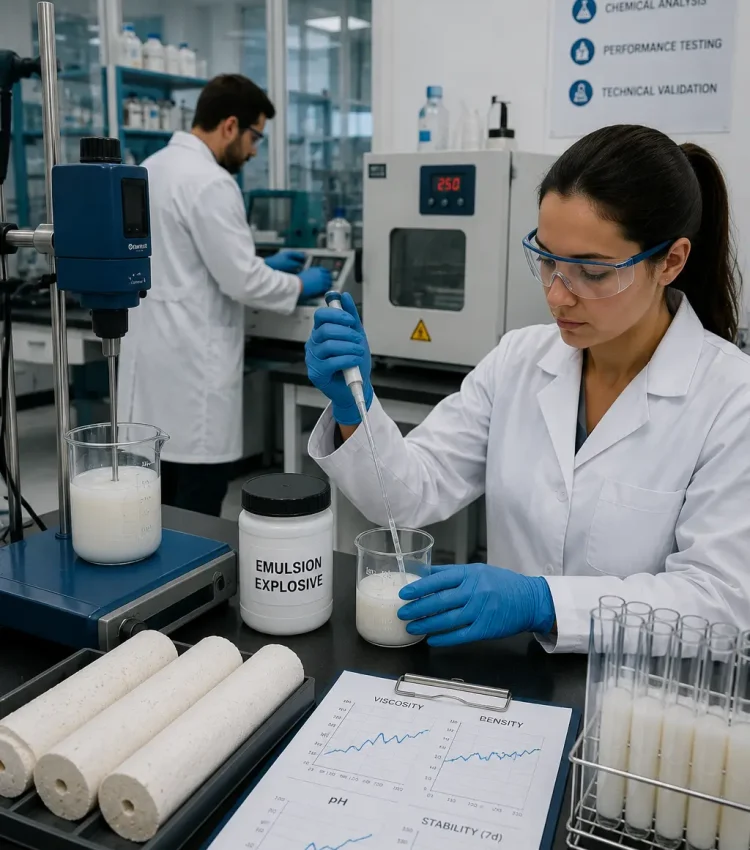
Before an explosive product is used in the field, it must be tested under controlled conditions. Laboratory testing allows companies to validate raw materials, emulsions, explosive behavior and product stability before exposing the operation to risk.
This process is essential for companies that need to meet technical standards and improve safety in mining operations.
Explosive Plant Audits and Field Support
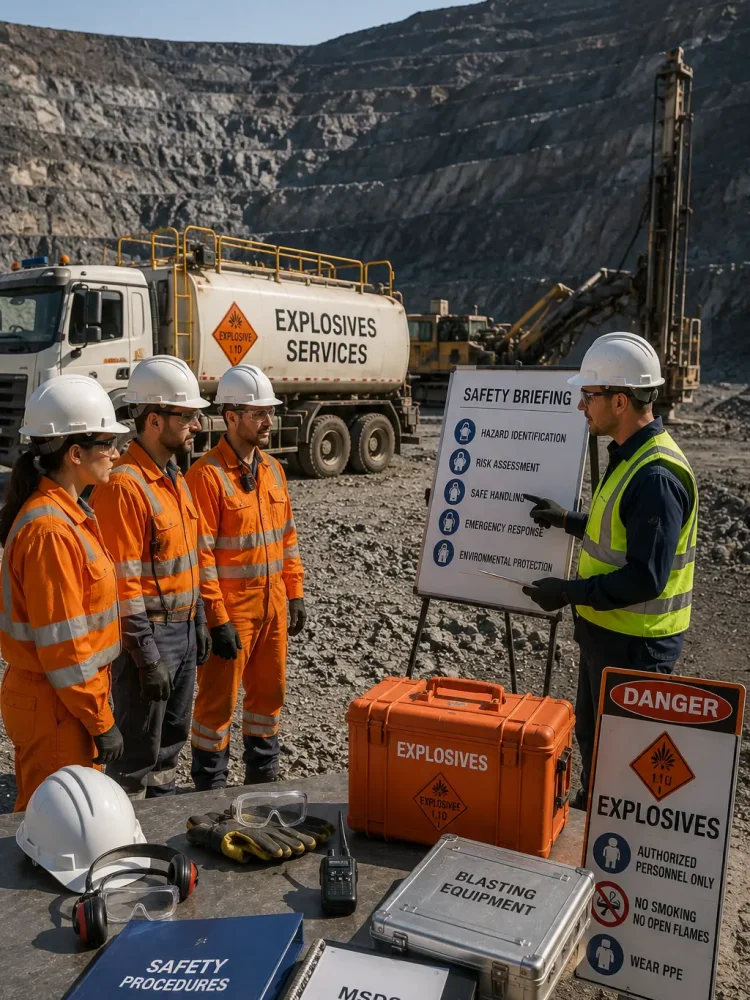
Explosive plants require strict control in every stage of the process. STX performs technical audits to evaluate procedures, production conditions, storage, handling and operational practices.
We also provide field support to verify real conditions, review procedures and support critical decisions during explosive operations, especially when there are risks related to reactive ground, sulfides or underground mining environments.
Reactive Ground, Sulfides and Explosive Risk Control
Reactive ground and sulfides are critical factors in mining safety. When explosive products interact with certain ground conditions, the risk of unexpected reactions can increase, affecting both safety and operational continuity.
For companies working with mineral sulfides or reactive ground, technical evaluation is essential before execution. STX helps connect laboratory analysis with field behavior, allowing companies to understand the risk before exposing people, products or equipment to uncertain conditions.
Reactive Ground Evaluation
Reactive ground can create dangerous conditions when it interacts with explosives. Identifying this risk before field application allows companies to adapt their procedures and reduce exposure to operational incidents.
Mineral Sulfides and Explosive Performance
Mineral sulfides can influence the stability and performance of explosive products. In some mining environments, sulfides may affect how emulsions, detonators or explosive systems behave.
Understanding this relationship is essential for safer execution and better control in mining operations.
Mining Systems, Automation and Operational Safety
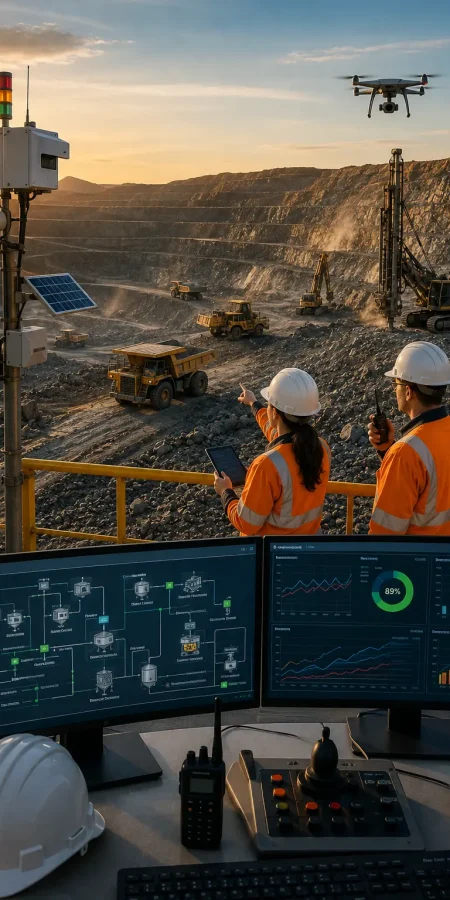
Modern mining safety is connected to systems, monitoring, automation and operational control. STX does not replace the role of technology providers, but helps companies understand how technical safety criteria should interact with mining systems and explosive operations.
A mining monitoring system, a mine safety management system, underground mine tracking, fatigue monitoring, proximity detection or collision avoidance systems can all support safer operations. However, in explosive environments, technology must be interpreted with technical knowledge and field experience.
Mining fleet management is also relevant when trucks, loaders, drilling equipment, underground mining machines and underground mining trucks operate near explosive areas. Good coordination between equipment, people and blasting activities reduces interference and improves safety during critical work.
Proximity Detection and Collision Avoidance
A proximity detection system in mining helps reduce risks between people, vehicles and machines. In underground mines, proximity detection systems and collision avoidance system mining solutions are especially relevant because visibility, space and reaction time are limited.
Fatigue Monitoring and Underground Mine Tracking
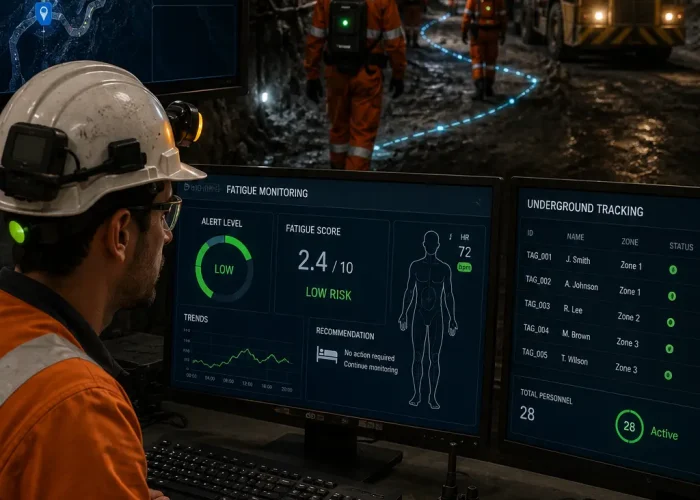
Human error is one of the main risk factors in mining. A fatigue monitoring system in mining can help identify operator tiredness before it creates unsafe decisions.
An underground mine tracking system also supports safety by improving visibility over personnel, equipment and movement inside underground mining environments.
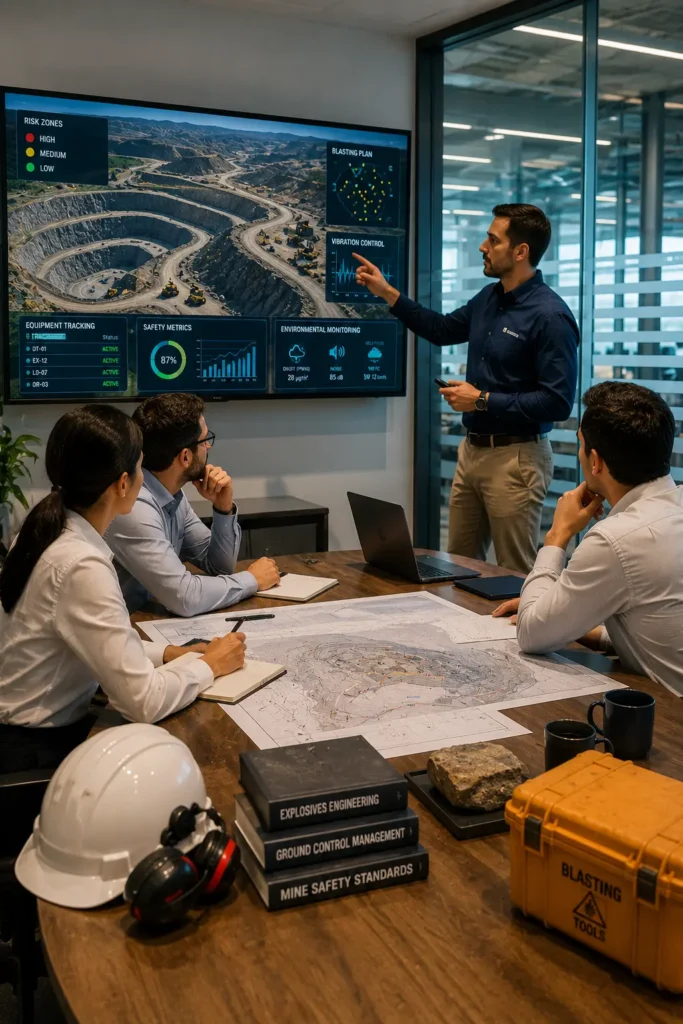
Specialized Mining Safety & Explosives Consulting
STX provides laboratory validation, failure diagnosis, and field support to minimize technical risks in mining. We ensure operational certainty through specialized audits, training, and advanced risk control.
Explosive Failure Diagnosis
Technical analysis to identify the root causes of detonator or explosive performance issues, preventing future incidents in complex mining conditions.
Laboratory Testing & Validation
Specialized validation of raw materials, emulsions, and product stability under controlled conditions before field application to ensure operational safety.
Reactive Ground & Sulfide Control
Technical evaluation of chemical interactions between explosives and reactive ground or sulfides to mitigate the risk of unexpected reactions.
Operational Audits & Field Support
Strict evaluation of explosive plants and on-site support to verify procedures, storage, and handling, especially in underground mining.
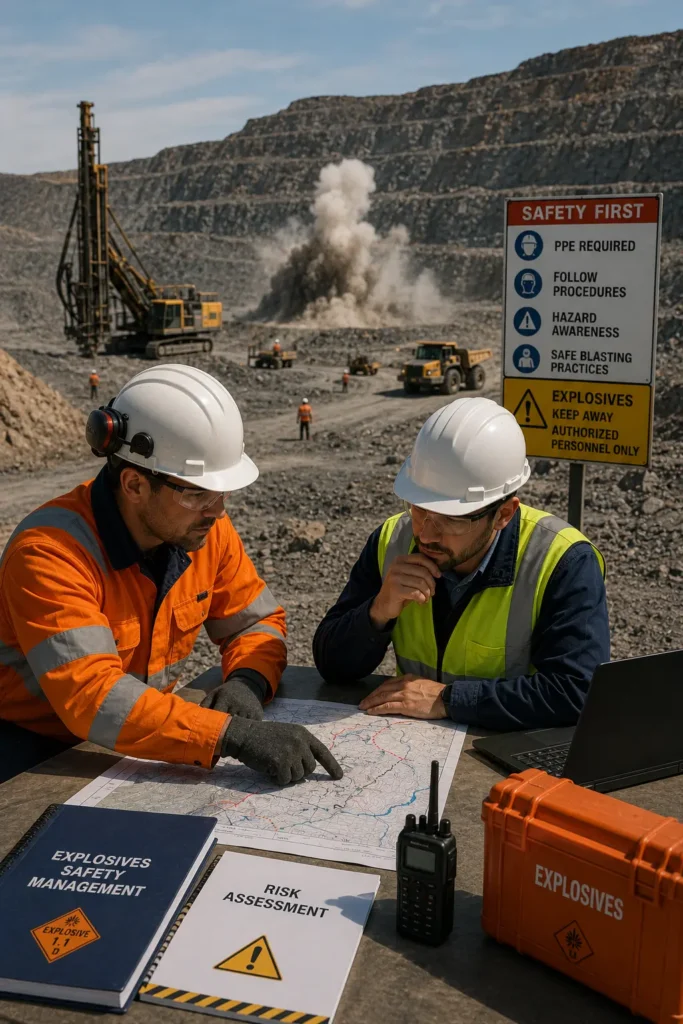
Specialized Mining Safety & Explosives Consulting
STX provides laboratory validation, failure diagnosis, and field support to minimize technical risks in mining. We ensure operational certainty through specialized audits, training, and advanced risk control.
Safety Consulting for New Products
Technical feasibility studies and formulation support for companies developing new mining emulsions or expanding into the explosives market.
Automation & Systems Integration
Expert guidance on how mining automation and monitoring systems—such as fatigue and proximity detection—should interact with explosive safety criteria.
Explosives Handling for LATAM
Specialized consultancy for companies expanding across Latin America, focused on internal safety protocols and technical explosives management.
Technical Training for Field Teams
Specialized training for engineers and supervisors to improve technical judgment, reduce operational errors, and strengthen safety culture.
Specialized Mining Consultancy LATAM
STX also provides specialized mining consultancy for companies operating or expanding across LATAM. Mining projects in Latin America often require a combination of field experience, laboratory validation, explosives handling knowledge and technical safety criteria adapted to complex operational environments.
For companies entering LATAM mining markets, uncertainty can appear in different stages of the operation: product development, explosive handling, detonator performance, emulsion behavior, reactive ground, mineral sulfides, underground mining conditions or lack of specialized internal knowledge. STX helps companies reduce that uncertainty through technical consulting focused on explosive operations and mining safety.
This support is especially valuable for explosive companies, mining engineers, civil mining engineers, technical managers and business groups looking to develop new mining projects in the region. Instead of relying on generic mining consulting, STX provides guidance from explosives experts with experience in laboratory testing, field support and operational risk control.
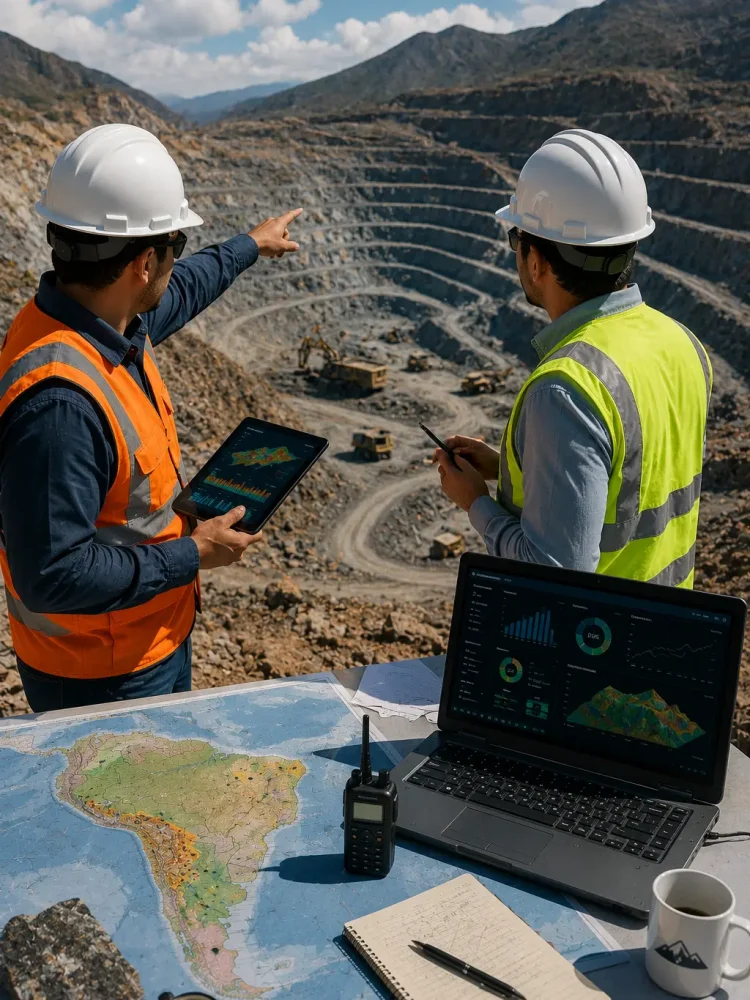
Explosives Handling for LATAM Mining Operations
Explosives handling requires strict technical control in every stage of the process. Storage, preparation, transport, loading, field execution and post-operation evaluation must be managed with precision because a small error can affect safety, productivity and product performance.
STX supports companies that need to review their explosives handling procedures, improve internal safety protocols and train teams working with detonators, emulsions and explosive products in LATAM mining environments.
Mining Laboratory and Explosives Lab Support
A mining laboratory or explosives lab is essential for companies that need to validate products before field application. Laboratory testing allows teams to evaluate raw materials, emulsion stability, explosive behavior and possible performance risks before the operation is exposed to failure.
STX connects mining laboratory analysis with real field conditions, helping companies determine whether a product, formulation or process is ready for use in demanding mining operations.
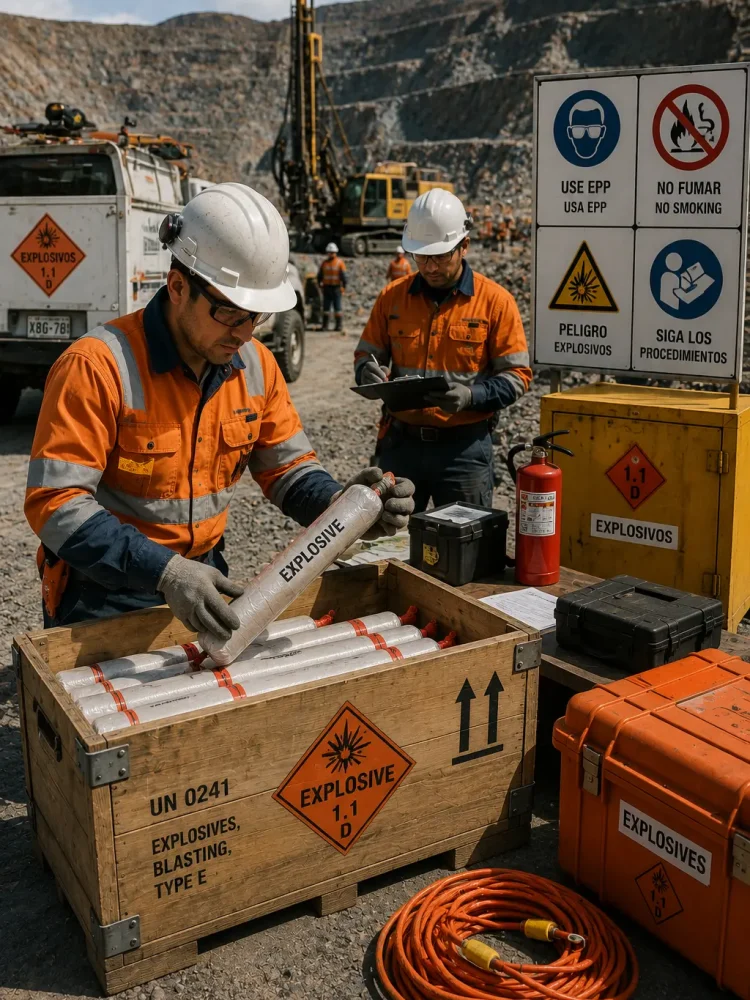
Frequently Asked Questions About Mining Safety
What is mining safety in explosive operations?
Mining safety in explosive operations refers to the technical control of all processes related to explosive products, detonators, emulsions, field conditions and personnel safety. It includes laboratory testing, risk analysis, audits, training and field validation.
Why is reactive ground important in mining safety?
Reactive ground is important because it can interact with explosives in unexpected ways. If the condition is not evaluated before execution, it may increase operational risk and affect product behavior.
How do sulfides affect mining explosives?
Sulfides, especially mineral sulfides, can influence the stability and performance of explosives depending on the ground condition and product formulation. This is why technical testing and field evaluation are important before operating in sulfide-rich environments.
What causes detonator failures in mining?
Detonator failures may be caused by product defects, poor handling, incorrect installation, environmental conditions, reactive ground, sulfides or execution errors. A technical diagnosis is necessary to identify the real cause.
Does STX provide specialized mining consultancy in LATAM?
Yes. STX provides specialized mining consultancy for companies operating or expanding across LATAM, especially when projects involve explosives handling, laboratory testing, detonator performance, mining emulsions, reactive ground or mineral sulfides.
Does STX provide mine safety supply products?
STX focuses on technical consulting, testing, audits, training and field support for explosive operations. It is not positioned as a generic mine safety supply provider, but it can help companies evaluate technical requirements related to safety and explosive performance.
Can STX support companies developing new explosive products?
Yes. STX supports companies in laboratory testing, formulation, validation and field support for new explosive products, especially mining emulsions and related technical processes.